Last Updated:
31/03/2026 - 12:18

A Social-Spatial Approach to the Interaction of Historic Buildings, Museums and Archaeology in the Dissemination of Cultural Policies in Early Republican Turkey (1920-1970)

TÜBİTAK 3501 – Career Development Program

Project Coordinator: Assoc. Prof. Dr. Pınar Aykaç

Project Advisor: Assoc. Prof. Dr. Pelin Yoncacı Arslan

Research fellows: Parnian Nemati (PhD), Doğa Deniz Yıldırım (Masters)

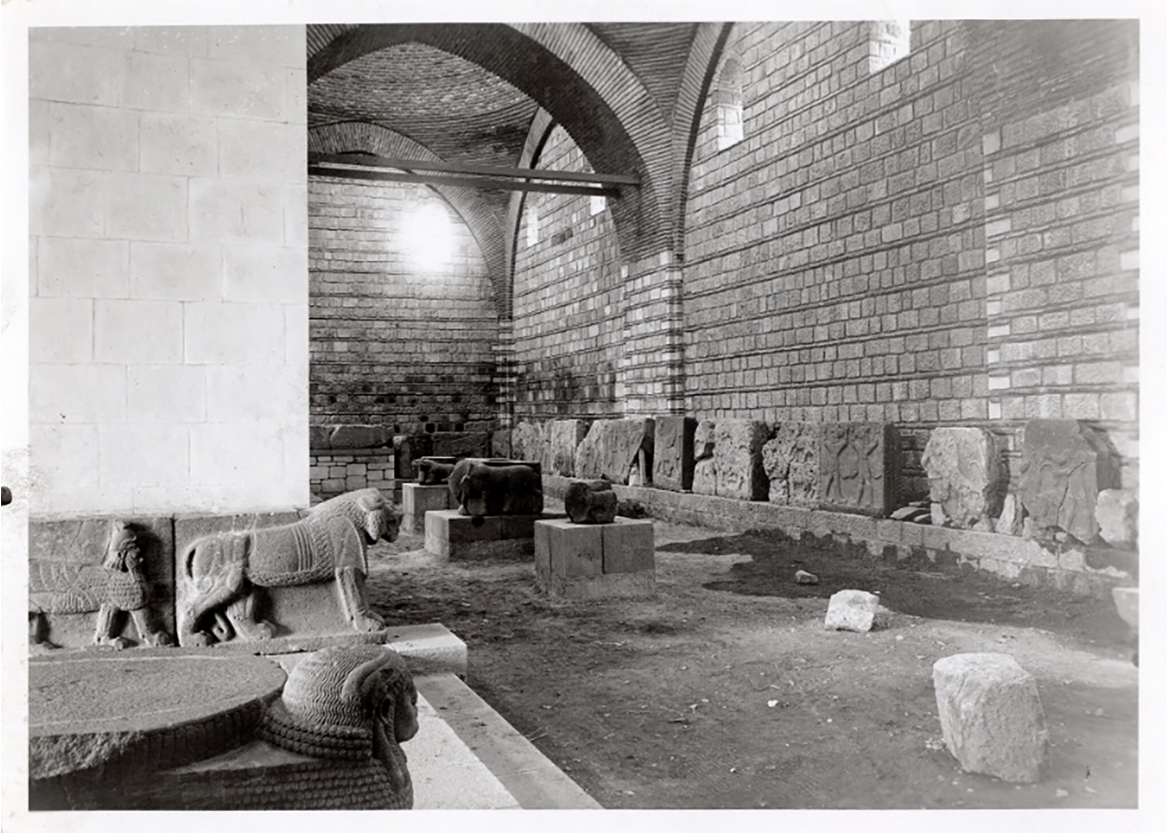
During the establishment of the Turkish Republic, historic buildings, museums, and archaeology played an important role in the formation and dissemination of cultural policies in the transition from the Ottoman Empire to the nation state. The cultural policies, which were established in the early Republican period, spread from Ankara, the new capital, to other parts of the country through historic monuments functioning as museums and the exhibitions of artifacts unearthed after new archaeological excavations in these museums. Influenced by the cultural policies of the period, this dissemination was the result of negotiations among national, international, and local actors such as, state institutions, universities, the Turkish Historical Society, People's Houses, NGOs, and international research institutes in Turkey as well as researchers and volunteers. Consequently, archaeological artifacts unearthed as a result of archaeological excavations across Turkey and around the capital Ankara were exhibited in the Museum of Anatolian Civilizations, which could be considered the national museum of the Republic of Turkey. Thus, the holistic strategy combining the practices of cultural heritage, museology and archaeology in the early Republican period was disseminated across the country through the multidimensional, variable and complex network of relations that local, national and global actors established with historic sites and objects, and this process was embodied in the exhibition of artifacts from archaeological excavations in Ankara and across the country at the Museum of Anatolian Civilizations.

tt

This project aims to reveal the multidimensional, shifting and complex relations of local, national and global actors with historic sites and objects across the country through a holistic strategy that combines the practices of cultural heritage conservation, museology and archaeology through a social spatial approach. This strategy was one of the most effective tools for the formation and dissemination of cultural policies in the early Republic. In accordance with this aim, the project intends to analyse, visualize and spatially contextualize the complex relationships and interactions of national, local and international actors with archaeological sites, historic buildings and objects exhibited in national museums. The project covers the period from the establishment of the Directorate of Turkish Antiquities in Ankara in 1920 to 1968, when the Museum of Anatolian Civilizations took its final form. The late 1960s was also a period of significant transformation in cultural policies, as museums in historic buildings began to move to their new buildings. In this context, the data obtained as a result of archival research, field research and literature research on archaeological excavations, museums and historic buildings converted into museums in the early Republican period will be analysed in terms of actor-network relations (Gephi) and spatial relations (ArcGIS Pro). By combining actor-network analysis with spatial analysis, the project will evaluate both social and spatial relations in a holistic way. By the end of these studies, the interactions between people, places and objects will be visualised as new narratives and stories with different types of data such as text, photographs, maps and videos and presented through web-based programs (ArcGIS Online and ArcGIS StoryMaps).

Although there have been studies focusing on the practices of museums, cultural heritage conservation and archaeology at different scales, there are very limited studies evaluating these practices in a holistic framework and focus on the relationships of local, national and global actors behind these practices with historic sites and with each other. The socio-spatial approach to cultural heritage, museology and archaeology adopted by the project offers a new perspective on the complex relations established by national, local and international actors with historic sites and objects in the context of early Republican Turkey.

HERITOUR - Enhancing collaborative synergies between Cultural HERItage and TOURism

Nehirleri Miras Alanlarının Başlatıcısı ve Şekillendiricisi olarak Yeniden Düşünmek: Menderes Maeandrum Nehri ve Deltası

Gökhan Okumuş (ODTÜ), A. Güliz Bilgin Altınöz (ODTÜ), Gerdy A. Verschuure-Stuip (TU DELFT)
Proje No:TEZ-D-201-2025-11778
Proje Türü: BAP Tez Projesi, Doktora
Proje Grubu: Mühendislik-Mimarlık